
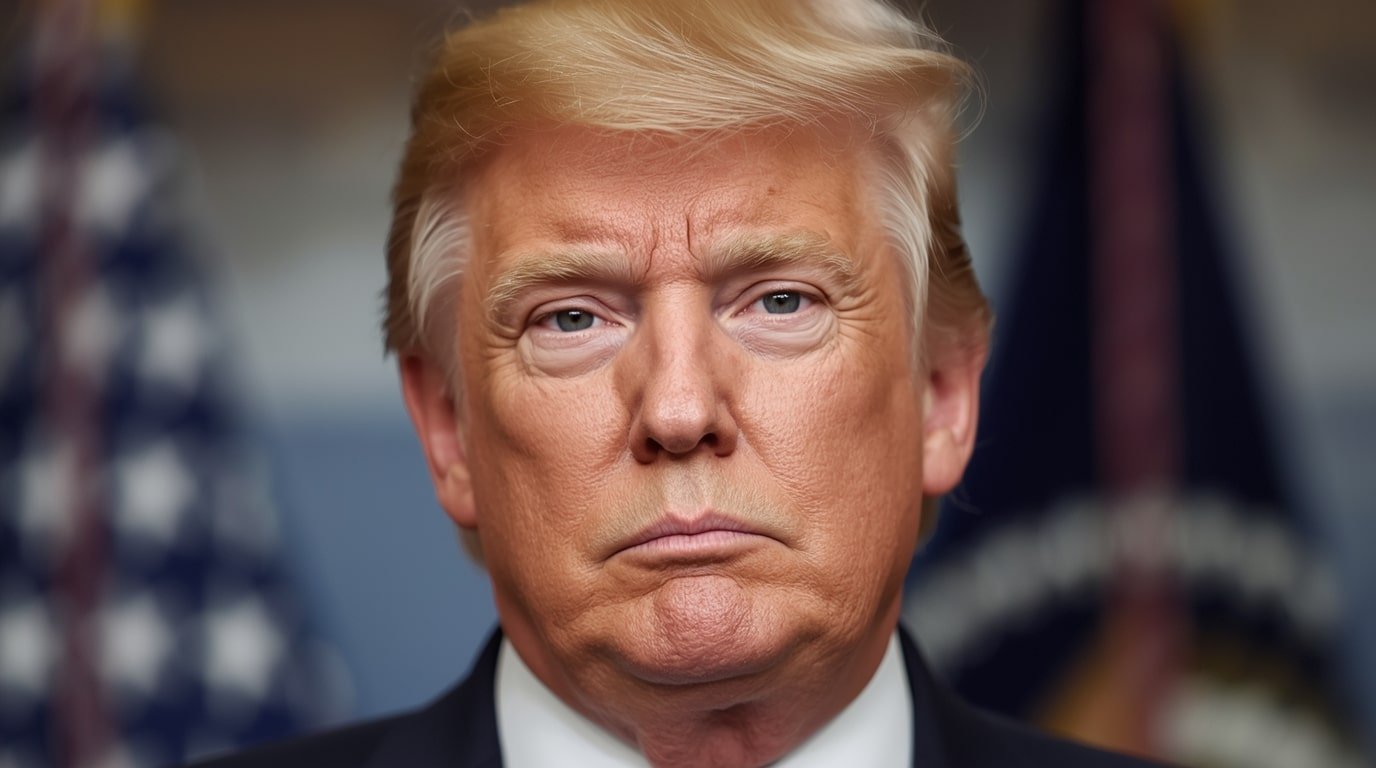
President Donald Trump declared late Friday the immediate cancellation of Temporary Protected Status (TPS) of thousands of Somali migrants living in Minnesota, a move that caused a firestorm among the immigrant rights movement and which promises to subject the president to inevitable court challenges.
The White House is being charged with taking a step towards tighter immigration enforcement, which impacts an estimated 8,000 people who have called the U.S. home due to close to three decades of humanitarian programs.
TPS was created to offer temporary deportation absenteeism to the nationals of the devastated countries due to war, natural disasters or other catastrophes under the Immigration Act of 1990. The name Somalia was a result of the endless civil war and instability experienced by the country since 1991.
In one of the most recent expansions, the program was due to expire in March 2026, though Trump revoked it abruptly, effective immediately, without undergoing standard review procedures, which has been alleged to be overreaching in procedures.
In a statement issued early on Saturday, Minnesota Governor Tim Walz said it was a heartless betrayal of families who had fled unimaginable violence. These Somali Minnesotans are physicians, educators and business people who are a part and parcel of our societies.
It is not only cruel to revoke their status without due process, but it is also not very legalese. Walz, a Democrat, promised to use all the state resources to protect the residents who were affected by federal agents.
The announcement is in the context of violent mass deportations pushed by Trump, which form the basis of his 2024 reelection campaign. During his first term, other efforts to target TPS holders in countries such as El Salvador and Haiti were met with efforts of litigation; the courts usually ruled in favour of protection on the grounds of unreasonable decision-making. Legal scholars suspect a rapid court battle in federal courts, and possibly reaching the Supreme Court by mid-2026.
There are Rising Legal Concerns against Humanitarian Issues
Immigration lawyers in Minneapolis have already been getting desperate cases. It is not policy, it is panic, said one of the advocates, who declined to comment on the matter because of cases being pending. The government has an uphill task of proving that Somalia has once again become safe for its returnees; this is after continuing al-Shabaab insurgencies and the threat of famine.
The statistics provided by the U.S. State Department highlight the danger: Somalia is listed among the most unstable countries in the world, and the number of internally displaced people in this country constitutes more than 1.5 million as of the end of 2025.
Challengers under the Administrative Procedure Act may claim that the termination is contrary to the provisions of the law of good cause and consultation. Such precedents as the 2018 ruling by the Ninth Circuit that blocked the Trump TPS rollback of Salvadorans may be critical.
These are hasty revocations that the courts have, over and over again, struck down, according to a professor of law at the University of Minnesota who is an expert on the rights of refugees. It is deja vu with the added intensity of polarised post-election politics.
Humanitarian blowback is huge. The Somali community in Minnesota, the biggest Somali community in the United States, has thrived in the Twin Cities and injected an annual 1.2 billion dollars into the local economy by doing business and sending remittances back home.
Revocation implies that work authorisations disappear, leaving families in limbo. In St. Paul and Minneapolis schools, the anxiety levels among students, most of whom are second-generation Americans, have increased due to the threat of their parents being deported.
Widespread Immigration Reform is on the Anvil
This action is an indication of the plan of the administration to crack down on immigration in an all-inclusive manner. Trump, speaking to his supporters at a rally at Mar-a-Lago earlier this week, billed the TPS reduction as a priority for the Americans and promised executive orders against DACA beneficiaries and asylum seekers at the border. Ending the invasion, he proclaimed, and the crowd screamed in approval of it, holding Build the Wall signs.
Such critics as the ACLU and the congressional delegation of Minnesota attack the move as discriminatory. Friday night, Senator Amy Klobuchar (D-MN) wrote emergency legislation to codify TPS extensions, but Republican majorities in Congress make it unlikely that they will pass. Klobuchar argued that this was targeting the vulnerable Muslim population in a state that had been friendly for generations. Not enforcement but expulsion.
At the state level, the Minnesota attorney general is planning to file a lawsuit accusing the breach of breaching the 14th Amendment to the equal protection clause. The AG said that federal overreach was at our borders. The actions of such advocacy organisations as Minnesota Immigrant Rights Action Committee and their parallel suits might turn into a class-action giant.
Reverberations on the Battles of the Past, Eyes on the Future
This TPS debacle has a Trumpian history of first-term disputes in which more than 300,000 immigrants had been deprived of protections before the courts reinstated them. In 2021, the Supreme Court affirmed the continued use of TPS on select Venezuelans, stating that Congress had the aim of providing flexible humanitarian aid. However, results are uncertain with a conservative majority of the high court solidified after 2024.
When Saturday dawned on the other side of the Mississippi, the area was full of vigils around the mosques and community centres of Minneapolis. Songs of No Human Is Illegal mixed with prayers of reprieve. The fear, in the case of Amina Hassan, a 42-year-old nurse, whose TPS expired in the middle of the night, is visceral. “I came here escaping bombs. Now, what? Send my kids back to that?”
The White House justifies the termination by claiming that it is financially fiscally sensible because of the 500 million in TPS expenses per year. Its spokespeople cite the elections in 2024 that were termed as stabilising in Somalia, but international observers reported massive fraud. According to legal scholars, this is a pretence and the injunctions will be predicted in days.
With the federal agents preparing to enforce, Minnesota is preparing to be disrupted. It is not merely a policy turnover under this TPS heading; it is a litmus test of the soul of America in the Trump 2.0 era. As the court dates approach, the sound of the gavel can be heard drowning out the rhetoric, compelling a calculation of compassion versus control.