
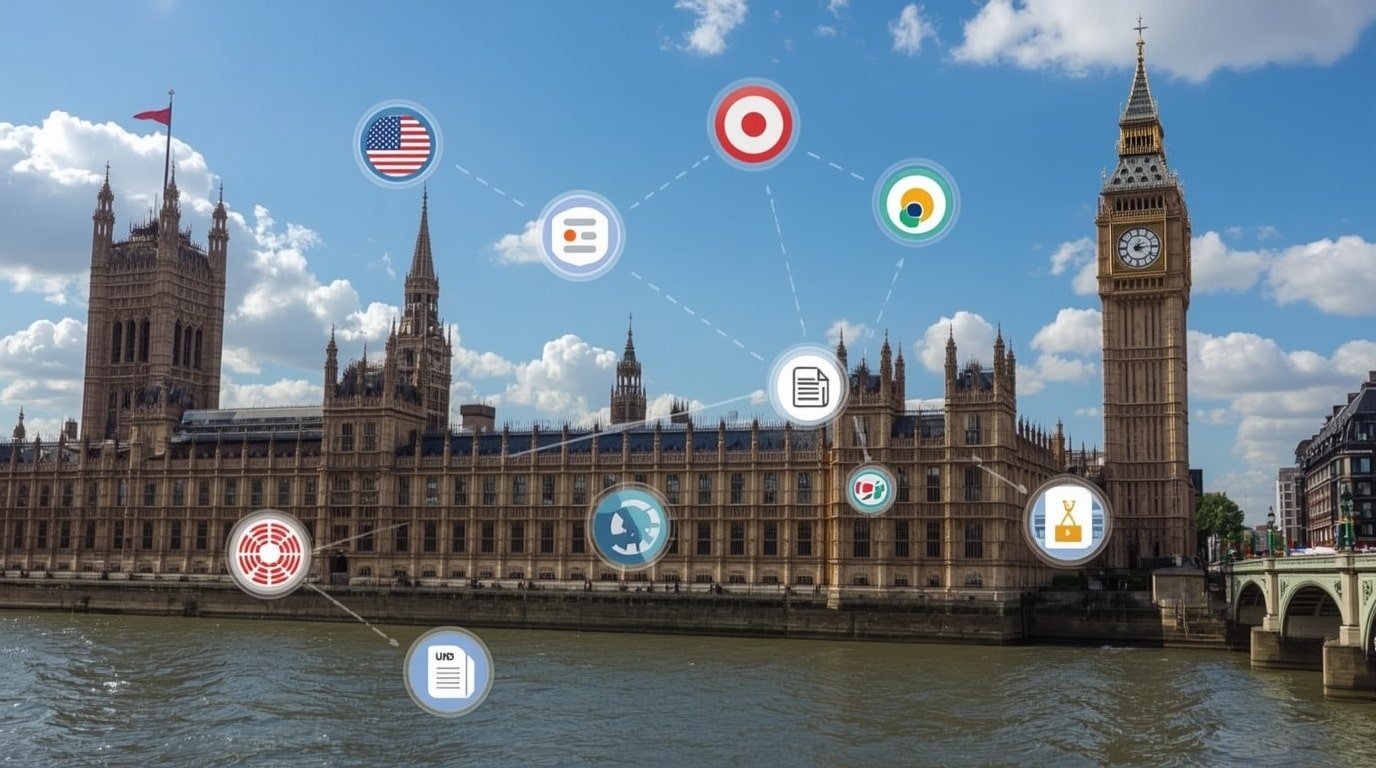
Parliament has passed legislation that will see wholesale changes to the Data Protection and Digital Information Act, a move that will facilitate cross-border movement of data after Brexit. The approval will be intended to align UK regulations with international standards and to diverge from EU regulations, which could increase trade and innovation.
The bill proposes the creation of data bridges – simplified adequacy ruling on international transfers to such countries as the US, Japan, and emerging markets. UK businesses will no longer be subject to the GDPR-equivalent limitations, and can transfer personal data without additional protection if the recipient countries comply with simplified requirements.
This involves better risk testing and less red tape, including compulsory contracts or binding company rules. The advocates believe it will save companies billions of compliance fees, leading to the creation of AI and digital services.
The reform also creates a new independent data authority that can provide recommendations on the latest technologies, such as blockchain and machine learning. Conversely, the privacy lobby complains of diluted protection, fearing a greater risk of surveillance and data abuse.
Implications for Companies and International Trade
In the case of multinational corporations, the developments are an indicator of a business-friendly environment. London and Manchester tech hubs are well-positioned to benefit from simplified relationships with Silicon Valley, enabling them to share cloud storage and analytics.
The small businesses that are usually overwhelmed by post-Brexit red tape will enjoy some relief when sending their goods to non-EU partners. Economists estimate a 15% increase in the volume of digital trade over two years, making the UK a more competitive offer than the EU, which has a more restrictive regime.
The opponents, such as opposition members in parliament, have cautioned that there is a risk of international conflict and that mechanisms need to be put in place to prevent abuse by authoritarian governments.
Safeguarding the Rights of Consumers and Privacy
In the process of enabling flows, the act enforces a sense of transparency: companies have a duty to alert users to the routing of their data overseas and to give them the option to disclose sensitive information.
Improved sanctions on offences – 4% of worldwide turnover, which is similar to the GDPR sanctions, and makes them accountable. Consumer groups embrace such measures but demand that they be enforced rigorously to avoid erosion of rights.
Prospects in the Face of International Changes
This has been approved as the UK is closing trade agreements with CPTPP nations, where data provisions are central. It can affect current WTO deliberations on digital governance.
Since the world is struggling with AI ethics and cybersecurity, the UK’s approach would set a precedent for balanced regulation. It will be implemented in Q2 2026, and the affected sectors will receive transitional assistance. Experts consider the reform a radical move towards a sovereign, agile data economy, but it is expected to have legal issues.