
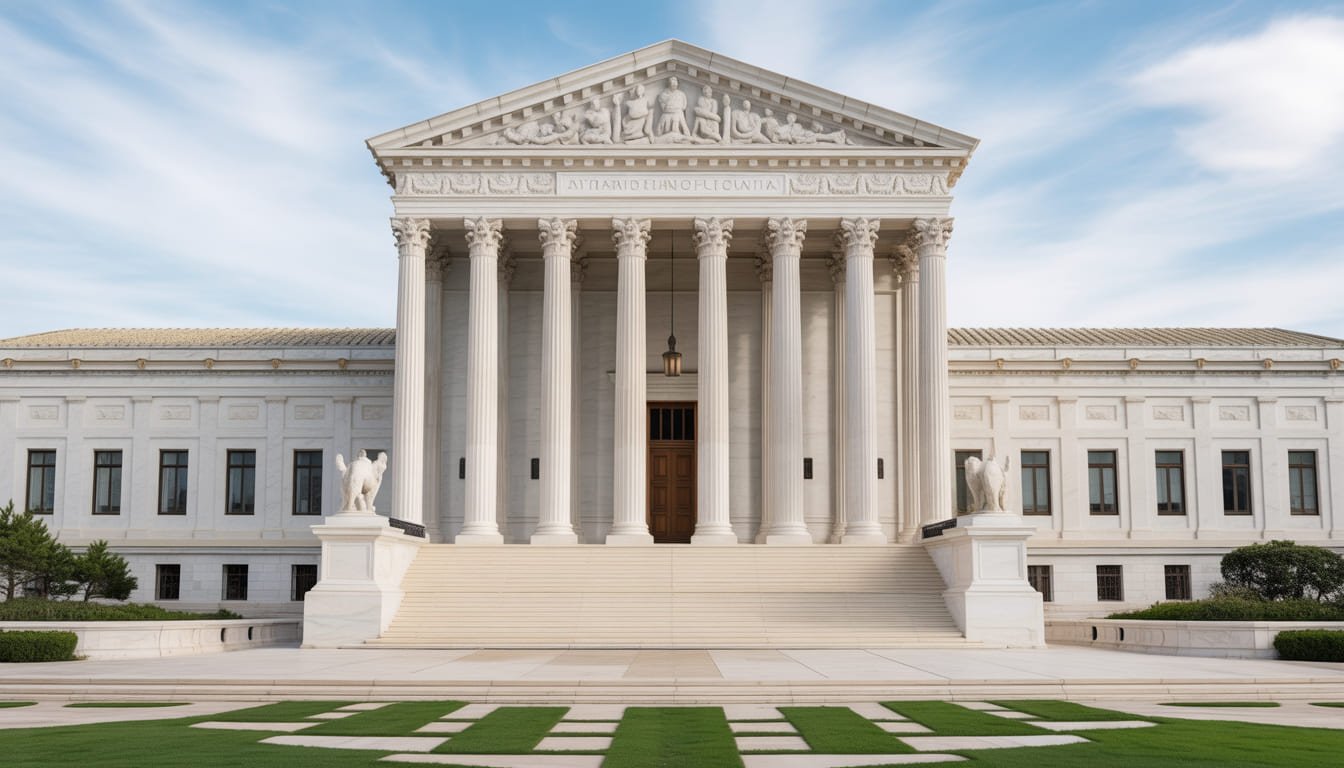
The U.S. Supreme Court, in a move likely to redefine the terrain of American governance, has issued a landmark decision in the case Trump v. Slaughter, which completely changes the balance of power between the executive branch and the independent federal agencies.
Essentially overturning almost 100 years of precedent, the 6-3 decision of January 10, 2026, gives the president more power to terminate agency heads without cause, prompting debate about the future of the administrative state.
Background of the Dispute
This case is based on the fact that, during his second term in office, former President Donald Trump sought to fire FTC Chair Lina Khan and other commissioners, claiming they disagreed with his policies. Since its inception in 1914, FTC has been a stand-alone agency with an independent commissioner who cannot be dismissed arbitrarily, a pattern maintained by the Humphrey v. Executor case of 1935. United States decision. That decision enabled Congress to protect some agency leaders against presidential whims, claiming that they were acting in a quasi-legislative and quasi-judicial capacity rather than as truly executive.
The legal team for Trump referred to the unitary executive theory, according to which Article II of the Constitution grants the president all executive power and requires complete control over agency activity. Critics, including the existing FTC leadership, with Acting Chair Rebecca Kelly Slaughter, argued that this kind of insulation is necessary to ensure nonpartisan expertise and congressional oversight.
The case did rise through the lower courts, where the first injunctions prevented the removals, and ultimately found its way to the Supreme Court, as the 2024 overruling of Chevron deference drew increasing attention to the question of administrative independence.
In December 2025, oral arguments showed that there was a lot of division. The conservative justices had doubts about the constitutionality of constrained presidential authority, whereas the progressive members had concerns about unchecked executive power.
It is interesting to note that Justice Elena Kagan’s investigative questions indicated an innovative unitary legislative theory in which the adoption of agency regulations by rulemaking was essentially legislative and, therefore, should be controlled by Congress rather than by executive authority.
The Court’s Decision
The majority opinion by Chief Justice John Roberts held that the president has inherent power to dismiss FTC commissioners at will, striking down a major part of Humphrey as the Executor. According to Roberts, the executive power should be accountable and faithful in the implementation of the laws.
The opinion differentiates the current roles of the FTC, which include both aggressive antitrust enforcement and consumer protection, from the more limited functions envisaged in 1935, and characterises them as involving a significant exercise of executive power.
Most of them, with Justices Clarence Thomas, Samuel Alito, Neil Gorsuch, Brett Kavanaugh, and Amy Coney Barrett, stressed the separation of powers. They used an analogy that Congress may not thwart the president’s main functions by setting up a new feudal system of fiefdoms within the executive branch.
Nevertheless, the decision does not hold that all independent agencies are invalid, but creates an exception for the activities of such institutions as the Federal Reserve, which is considered unique because of its quasi-private nature and its historical roots in the predecessors of the nationwide banks.
Concurring with the dissent are Justice Kagan and Justices Sonia Sotomayor and Ketanji Brown Jackson, who criticised the decision as a harmful attack on administrative stability. Kagan claimed that the decision violates a historical deal under which Congress grants agencies the power to make rules in return for being insulated from political influence.
By eliminating this structure, the Court gives the president unchecked influence over aspects of policy that should be debated by experts working together, not independently, she said. The objections pointed to the possibility of anarchy in the application of regulatory rules, including labour protections for the environment, if the heads of the agencies become White House proxies.
Federal Agency Implications
This historic decision goes beyond the FTC, which may impact dozens of independent agencies, including the Securities and Exchange Commission, the National Labour Relations Board, and the Consumer Product Safety Commission.
Law scholars forecast a deluge of problems with the current frameworks, and a more empowered presidency that can make agencies more responsive to its demands. Another example is that under EPA regulations, environmental regulations may be subject to swift changes if leadership changes become common.
Business leaders have received the decision favorably and have seen it as a balance to excess. This, according to a spokesperson of the U.S. Chamber of Commerce, will bring back accountability to the regulatory process, as the independent agencies have accumulated too much power and are not directly accountable to the electorate. On the other hand, consumer activists lament that it will be a backlash against corporate monopolies and malpractices.
The decision extends new changes, including the Loper Bright Enterprises v. 2024. Raimondo ruling that terminated judicial deference to agency meanings of statutes. The combination of these changes points to a judicial shift toward restricting the administrative state, forcing Congress to write more specific legislation rather than relying on agency discretion.
Extended Political and Economic Implications
Politically, the ruling comes at an opportune time when the partisan relations are on the rise, with the democrats accusing the conservative majority of judicial activism. The administration of President Kamala Harris has committed to seeking a legislative response, which could include modifying laws to strengthen agency independence. Republicans, however, view it as a vindication of the executive prerogative, in line with efforts to streamline government operations.
Market responses were modest, as investors expect less regulatory uncertainty in areas such as technology and finance. The presidential priorities can change the competitive environment in which antitrust actions against large companies take centre stage, either because of presidential priorities or because of the FTC, which once led the case.
Moving Forward: A New Governing Democracy
With the dust having settled, the Supreme Court’s redefinition of federal agency authority is a watershed point in administrative law. It highlights the judiciary in interbranch policing, despite the critics sounding the alarm over the concentration of power.
As appeals and related cases are awaited, including with other agencies, the full impact may be felt several years down the line. At least this decision once again reinstates the president as the most critical figure in the executive order, in opposition to the very bureaucracy that has characterised the contemporary American government.
In the era of rapid policy change, the ruling raises the question of the optimal way to combine expertise, accountability, and democratic control. This rebalancing is being observed by the nation as the agencies evolve, and whether this rebalancing makes or breaks the foundations of the federal system.