
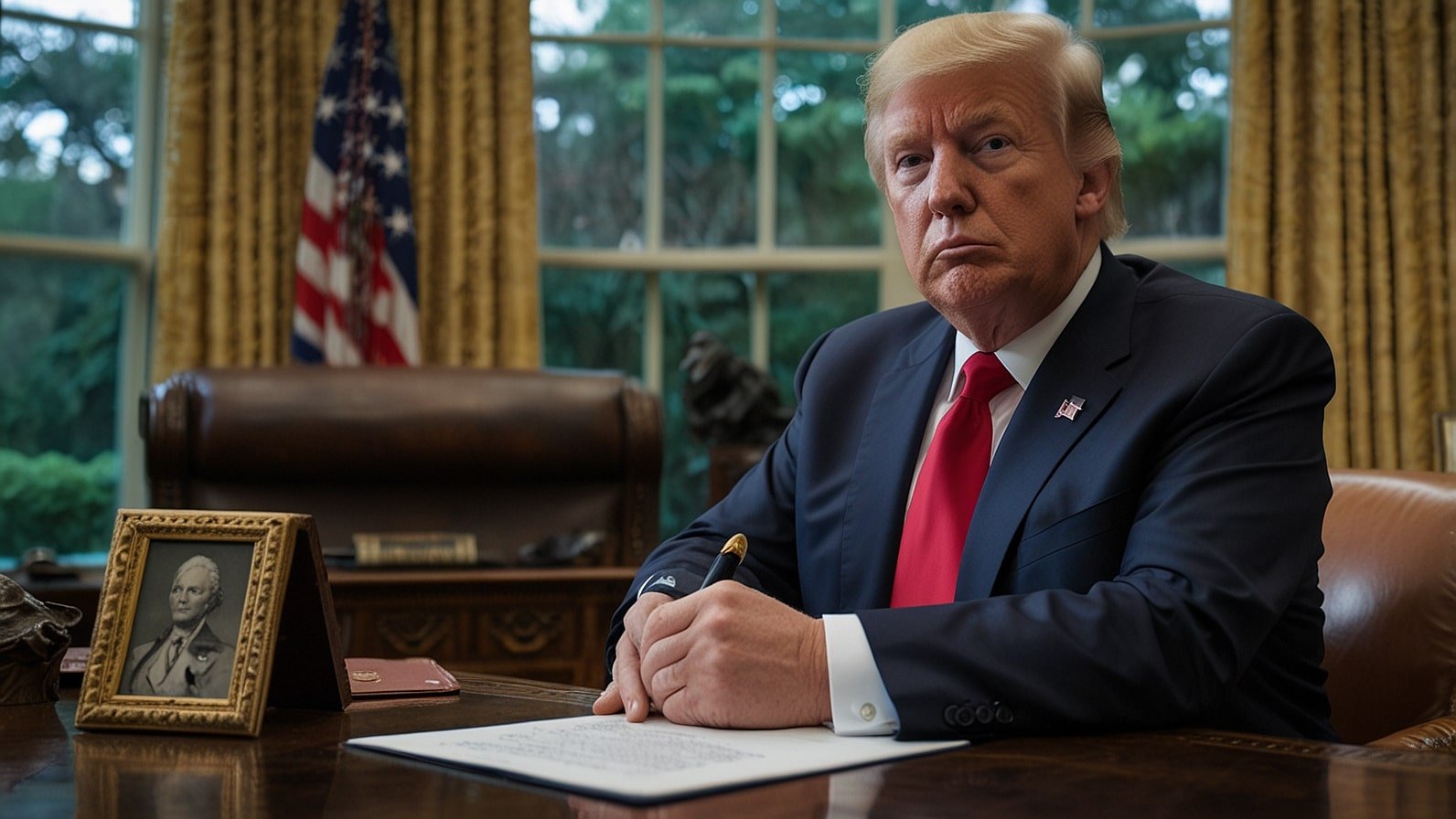
With what would be ironically called a dramatic twist of events, President Donald Trump on November 14, 2025, signed into law a wide-ranging spending bill that not only lifted the record government shutdown in U.S. history but also added a very contentious prohibition on intoxicating hemp products.
The bill that was stuck in partisan debates throughout the weeks is a turning point in the federal policy, a mix of financial accountability and regulations overhaul of the agricultural and cannabis industries. The action has generated a high incidence of both industry leaders, legislators and consumers, and this indicates the delicate balance between economic recovery, as opposed to the health of the people.
Resolving the Record-Breaking Shutdown
The government shutdown that started in the first half of the year because of intense talks on the budget allocations, had paralysed government activities and impacted millions of Americans. Federal workers had to work without pay for an unprecedented period, national parks shut down, and the fundamental services were grounded.
The stalemate was based on the funding of major agencies, such as agriculture and food safety programs. Congress finally settled with late-night sessions that had a compromise in the form of a $26 billion appropriations bill known as the Agriculture, Rural Development, Food and Drug Administration and related agencies appropriations bill.
This bill provides some important funds to strengthen food safety efforts, rural development, and FDA oversight. The signature by President Trump followed the Senate bipartisan approval almost immediately, and this was an indication of a bipartisan process of restoring normalcy.
As a part of his Oval Office remarks, Trump pointed out that the legislation was essential to expedite the reopening of the government and that the legislation would be a direct relief to the impacted families and the stimulation of economic activities that were halted due to the shutdown. But hidden in the stipulations of the bill was a provision that has drawn a firestorm in the hemp industry, which is rapidly growing.
The Family Ban on Controversial Hemp Products
The centre of the controversy is an amendment sponsored by Senator Mitch McConnell, a long-time supporter of hemp farming, yet a very strong opponent of what he describes as the hemp loophole. The provision reclassifies hemp in federal law to exclude all products which have measurable amounts of the psychoactive compound of cannabis, namely, THC.
In essence, it prohibits all inebriating hemp products, such as mainstream products featuring delta-8 THC edibles, beverages and vapes that have flooded the market as a result of the legalisation of hemp farming in the 2018 Farm Bill.
The 2018 Farm Bill had separated hemp and marijuana with a reduced content of THC at 0.3% on a dry weight basis, which opened a floodgate of hemp-produced cannabinoids. This formed a grey zone in which synthetically produced intoxicating products had the potential to be sold on a legal basis without strict regulations.
The new ban should reduce this loophole and bring hemp closer to the traditional agricultural commodities, which will impose intoxicating variants under the same regulations as marijuana under the Controlled Substances Act.
The advocates believe that the action keeps the consumers, especially the minors, safe against unregulated products that imitate the effects of marijuana without clearly matching safety measures. FDA authorities have repeatedly been alerting to the dangers, citing reports on adverse health effects and unreliable potency of these items. The bill gives businesses a period of one year to do so, and in that period, they have to either withdraw the prohibited products or redesign them to exclude the traces of THC.
Industry Backlash and Economic Ramifications
The hemp business is also an estimated 28-billion industry with existential threats. Businessmen who have heavily invested in products derived from hemp with a high level of tetrahydrocannabinol are stunned by the abrupt change in regulation.
Trade associations have lamented the ban as excessively reaching and may result in mass bankruptcies and loss of jobs. It was described by one of the leaders of the industry as a death knell to a segment of the industry that had offered alternatives to traditional cannabis in the states where marijuana is still illegal.
The stakeholders note that the ban was included in the spending bill as a lowly debated provision that many were not aware of. The pressure of lobbying had been growing in previous months, and the proponents of hemp advocated in favor of control instead of a ban.
At this point, the emphasis is on mitigation measures with the law in place. Some companies are considering non-intoxicating products of CBD, and others are looking to challenge the law in court, claiming the amendment is unconstitutional under the interstate commerce clauses or that the amendment is discriminatory to small businesses.
Manufacturers are not the only ones affected economically. Whether it is a convenience store or an online store, retailers will have to reorganise inventories, which may cost them millions of dollars. The farmers who transitioned to hemp production after 2018 can revert to their previous crops, which will impact the economy of the rural areas. Analysts foresee a shrinkage of the market, and it is estimated that there will be a possible decline of 50% in the revenues of hemp-related businesses over two years.
General Policy Implications of Cannabis
This phenomenon takes place in the context of changing attitudes towards cannabis in the country. Although some states have legalised recreational marijuana, the federal ban continues, which results in a patchwork of laws.
The ban on hemp may be an omen of an even more aggressive approach toward psychoactive drugs by the Trump administration, despite the increasing popularity of cannabis reform. Proponents of the complete legalisation of marijuana view this as a blowback, as they fear that it will become a hindrance to the process of descheduling cannabis in the federal government.
On the other hand, the decision by the public health professionals is cheered as it is seen as a move to the standardisation of regulations, which puts safety first. The FDA is likely to increase the enforcement, maybe working with state agencies to check compliance. This would open the path to more explicit rules regarding the use of non-intoxicating hemp products and consequently lead to innovation in such sectors as textiles, biofuels, and nutritional supplements.
Looking Ahead: Problems and Opportunities
The one-year compliance window allows adaptation, a little time to go by as the dust settles. The industry associations have already prepared a lobbying blitz in Congress to introduce bills to regulate instead of prohibit the intoxicating hemp products. Court fights are also foreseen, as the legal scholars expect some suits that will contest the constitutionality of the ban, as well as the fact that it is included in unrelated spending legislation.
To the consumers, the environment becomes very different. Famous merchandise can run out of stock, and the demand moves to black markets or state-approved marijuana dispensary. This might hasten the need to have an overall federal cannabis reform that can be seen as a unification of divergent interests in a move to have clarity.
Eventually, the fact that Trump signs the bill is an oceans point, a mixture of financial necessity and regulated enterprise. It replenishes the government functions, but it upsets a prosperous industry, which highlights the uncertainty of creating the policies in a divided era. Towards the end of November 14, 2025, the complete impact of this law will be felt, as it will determine the future of agriculture, health, and commerce in America.