
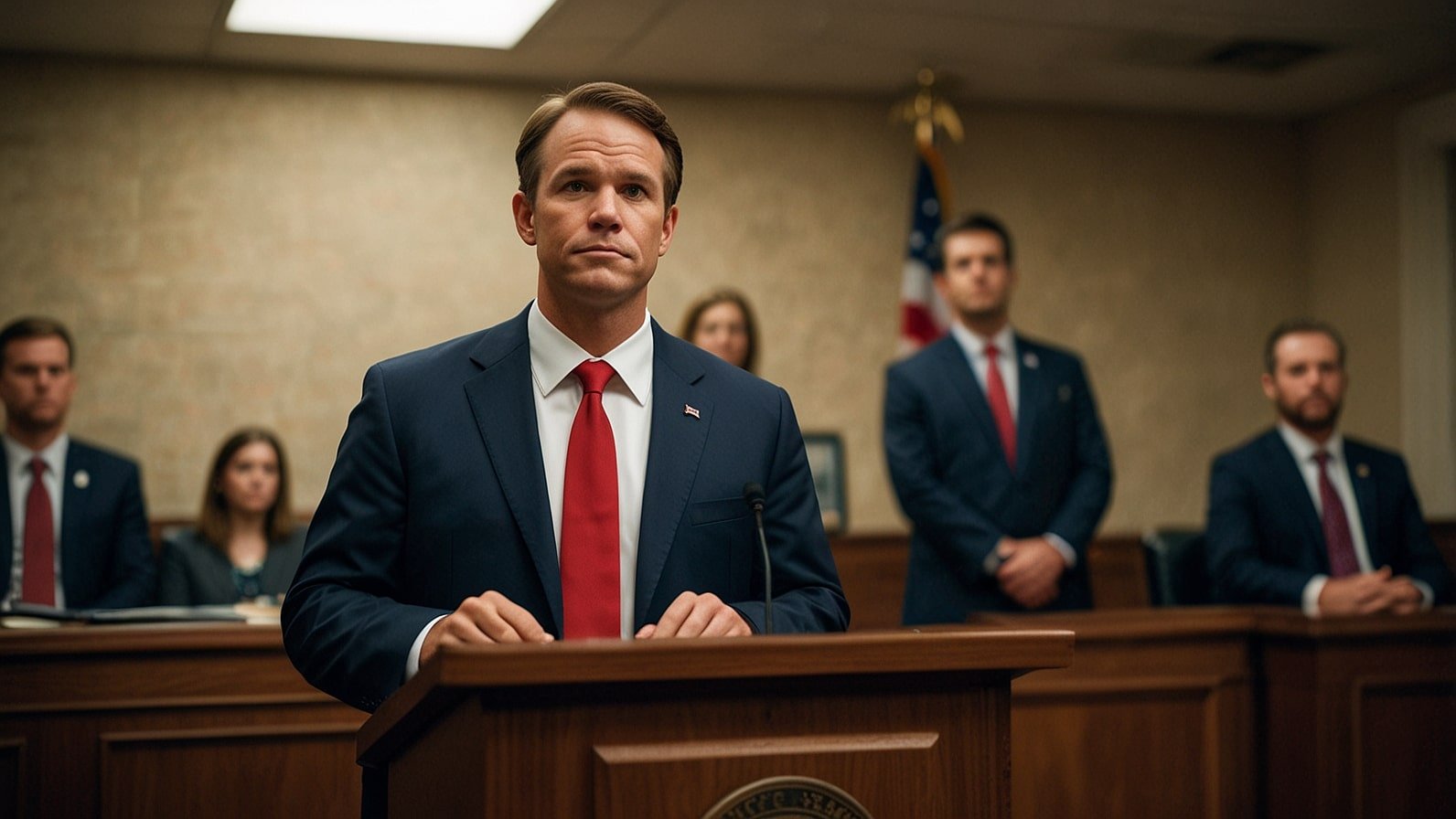
Making a controversial move that has once again sparked the Second Amendment rights and safety debate, Texas Republican Congressman Wesley Hunt has introduced a bill that seeks to repeal major sections of the Bipartisan Safer Communities Act, the historic gun reform bill signed into law following the Uvalde school shooting of 2022.
The proposal came out during the campaign for a U.S. Senate seat by Hunt and points to the rising rifts in the Republican Party on gun policy, and may indicate changes in the new administration. With the country struggling to resolve recurrent mass shootings and constitutional interpretation, this bill puts bipartisan collaboration to the test regarding its sustainability in dealing with firearm violence without general limitations.
The initiative of Hunt is timely, as gun-related cases are still at the top of the news, and both parties in the gun control debate debate which side of the argument to prioritise more.
The law is aimed at repealing what the proponents believe have been effective methods to curb illegal trafficking and improve the background checks, but opponents consider them as intrusion into the rights of the law-abiding citizens. Such a shift may affect the debates on gun control in the United States, particularly as President-elect Donald Trump is going to assume office and prioritise the strengthening of the Second Amendment.
Specifications of the Second Amendment Restoration Act
The bill is known as the Second Amendment Restoration Act, and it will address some of the fundamental aspects of the 2022 law. It suggests getting rid of the laws that crack the neck of straw purchasing, where people purchase guns on behalf of those who are not allowed to purchase them.
Through these rules, it has resulted in hundreds of prosecutions, which include weapons being smuggled across the borders to criminal gangs. Hunt claims that there is no necessity to create new laws to fight trafficking since the current legislation is enough, and there is no need to overstep the federal government, which may overload the small enterprises and legitimate dealings.
Also, the act would cancel a prerequisite to encompass juvenile records in the National Instant Criminal Background Check System for purchasers less than 21 and require a prolonged period of examination of these acquisitions. This transformation will deal with issues of unwarranted delays in the exercise of rights by young adults, which may include the misdemeanours they committed during their youth.
The bill also seeks to reduce funding associated with red flag laws, which entail the temporary removal of people who become dangerous. Though states such as Texas have not yet adopted such laws, federal incentives have assisted their application in other states, which has resulted in their criticism by individuals who believe such laws will be abused, even with inherent due process protection mechanisms.
The act has received the support of key gun rights groups with eight co-sponsors, including other Texas Republicans. These groups glorify it as a much-needed correction of what they consider a gradual undermining of constitutional liberties.
Hunt underlines the idea that the right to bear arms is explicitly discussed in the Constitution, and that is why his bill is a defence against the policies that can deprive responsible Americans of arms in a more and more uncertain world.
Bipartisan Safer Communities Act Background
The Bipartisan Safer Communities Act, enacted soon after the unfortunate gunfire in Robb Elementary School in Uvalde that killed 19 children and two teachers, was a rare moment of agreement on gun matters in Congress.
The law, headed by Texas Senator John Cornyn, spent billions on mental health care, school security and violence prevention programs. It also sealed gaps in background checks by integrating juvenile backgrounds and provided more severe consequences of unlawful gun sales to stop firearms usage in harmful hands without the creation of new prohibitions or records.
The introduction of the act was a result of numerous public pressures and negotiations, after which more radical Democratic proposals, including assault weapon bans or universal background checks, were dismissed. Instead, it concentrated on interventions to be more targeted, such as supporting states to establish crisis intervention programs.
Although Texas did not implement red flag measures, it had the benefit of receiving funding towards alternative courts that dealt with mental health and substance abuse. It was welcomed as a realistic move by its supporters because it was said to save lives due to the increased enforcement and resources.
Nevertheless, since its creation, the law has experienced criticism among the hardline conservatives who saw it as a compromise to the anti-gun activism. Cornyn also faced internal criticism during party events, and some people accused him of undermining fundamental values.
The Uvalde follow-up revealed fundamental weaknesses in police inaction and mental health care provision, which inspired the need to change and highlighted the difficulty of operating in a polarised legislative context.
Reasons Driving the Push for Repeal
The gun law suggested by Hunt is strongly interwoven with his Senate bid against incumbent Senator John Cornyn, as the proposed gun law serves as a testament to the lack of conservatism. Hunt opposes the act together with Texas Attorney General Ken Paxton, citing the fact that the act encourages red flag expansion and postpones the access of young people to guns.
They argue that these aspects open the possibility to take advantage of a government that is robbed of rights based on personal decisions without sufficient grounds. Paxton has made the matter a public litmus test of the actual Second Amendment advocacy.
The wider reasons involve the need to be able to identify with the interests of the new Republican administration, which has been promising to focus on deregulation and the freedom of individuals. Pro-gun advocates insist that the post-Uvalde actions have not proved to actually reduced violence but rather make it difficult to legally own firearms.
Due to the fact that the law has not been able to reduce mass shootings, there have been questions regarding its effectiveness by citing the cultural and societal factors as the underlying cause. This attempt to repeal is an indication of a base voter mobilisation tactic in the primaries, where gun rights tend to take the centre stage.
Key Stakeholder Response
Reactions to the bill by Hunt have been bitterly partisan. It has been zealously promoted by gun rights lobby groups, such as national associations, who have seen the repeal as a step to protecting freedoms under perceived attack by progressive policies. According to them, the initial act was a bad precedent of what other restrictions may be imposed in the future.
Contrastingly, Cornyn has strongly supported his efforts, claiming that the legislation is safer for the communities and does not violate constitutional rights. He also remarks that it helped prosecute the traffickers and improve school protection, and that efforts to repeal it are politically motivated attacks.
Gun safety groups have not only criticised the proposal, but they have said that reversal of these measures may worsen the trafficking process and leave gaps in the background checks untapped. Affected families of Uvalde and other cases have spoken up, claiming that something has to be done to ensure further loss of lives is avoided.
Democratic lawmakers and lobby interest groups are lamenting the action as regressive, which can pose a threat to life in the name of ideological purity. They emphasise the statistics that present the role of the act in stopping illegal sales and participating in mental health projects.
Policy implications of the National Gun Policy
The bipartisan gains, particularly concerning gun control, may be put to the test as this legislative push may be a sign of a more comprehensive reversal of federal gun regulations during the Trump administration. Although the bill has challenges in a partisan Congress, including the Senate filibusters, its introduction intensifies politics in the GOP and could affect platform issues before the elections.
Should they succeed, the repeal could even embolden states to be resistant to federal incentives, changing the way red flag laws and background checks will develop. On the other hand, defeat may strengthen the maintenance ability of the act, as it will demonstrate that practical safety mechanisms are not subject to partisan obstacles. With America struggling with the ongoing firearm violence, the episode highlights a historical debate of rights and responsibilities, which determine the course of policy in the era of increased criticism.
The result is that it is likely to bring an echo across the country, in the efforts of violence prevention and constitutional interpretation. As people remain split over the issue, the background checks have been mostly endorsed, but the wider controls have not, so the debate is set to get extremely tough, and politicians will have to work a fine balance between lives and liberties.