
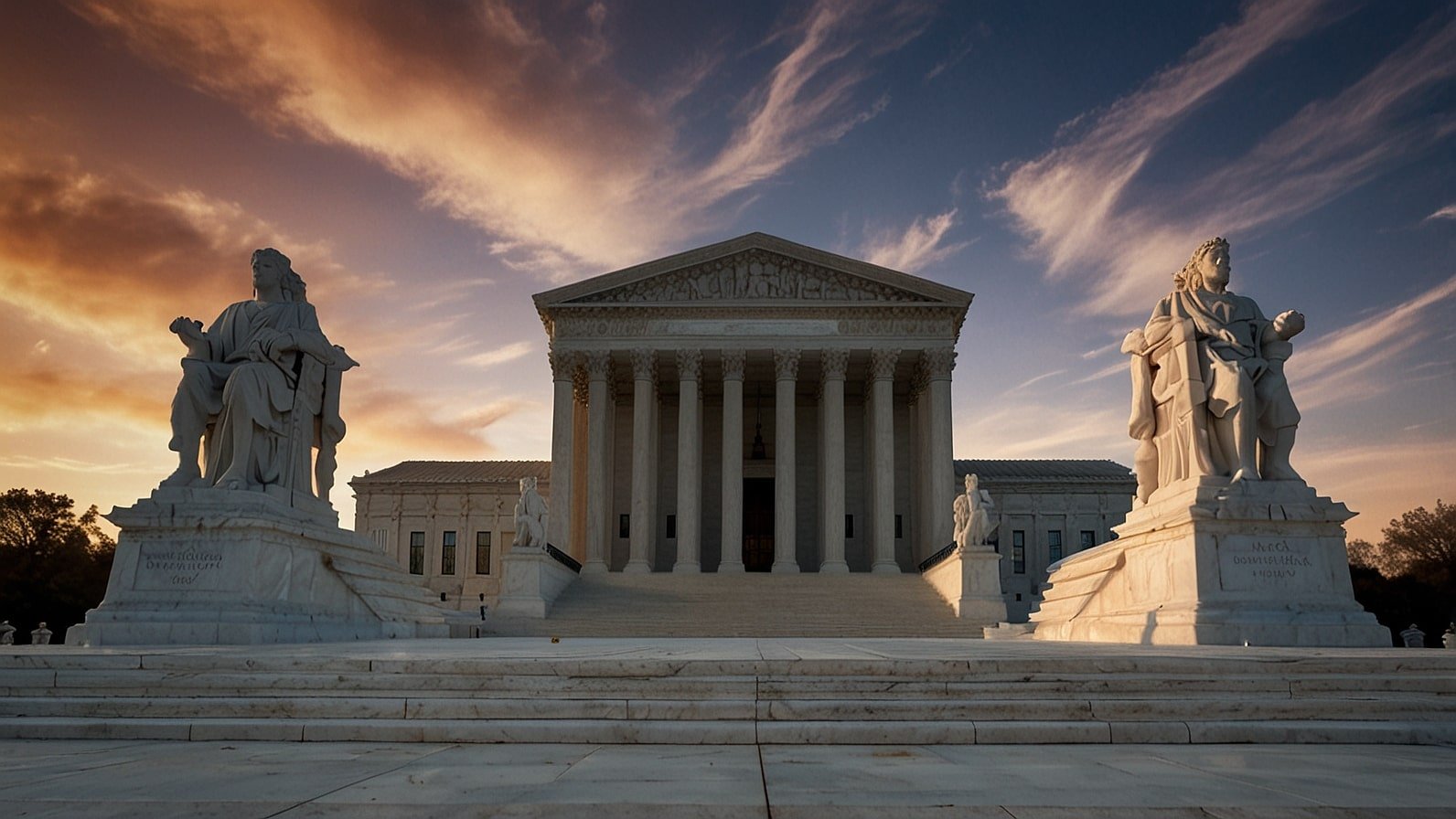
The case was one of the most hotly contested gun control decisions in recent times, as on November 14, 2025, the U.S. Supreme Court issued a landmark ruling in support of a federal gun ban on assault weapons, effectively solidifying the case.
The case of Smith v. 6-3 decision. The United States is a major win in fighting the proponents of more stringent gun control laws, as Second Amendment rights and the safety of the population continue to be challenged.
This sentence is issued when mass shootings are still rampaging through communities, and it requires the renewed efforts of both lawmakers and citizens to take action. This ruling has direct consequences for gun manufacturers, owners, and state legislatures and could change the gun policy in America over generations.
The Legal History and Origins of the Case
The scuffle started with the enactment of the Assault Weapons Ban Act of 2024, which President Biden, who served until the end of his term, signed. This act restored and extended the 1994 federal assault weapons ban, which expired in 2004, to the manufacture, sale and possession of the semi-automatic rifles with some features characteristic of the military, including high-capacity magazines and pistol grips. This bill was adopted as a reaction to a sequence of high-profile cases, such as school shootings, major massacres in the community that have taken the lives of hundreds of people.
The groups of gun rights groups, especially the National Rifle Association, were quick to appeal the law, claiming it violated the constitutional provisions in the Second Amendment. The case originated in one of the lower courts in Texas, and it was taken through appeals to the Supreme Court.
Plaintiffs argued that the ban discriminatory attack against firearms used to defend themselves and to be used in sport, thus going against past precedents in cases such as District of Columbia v. Heller, 2008, and New York State Rifle and Pistol Association vs. Bruen (2022).
Earlier this year, during oral arguments, justices questioned both parties about the historical background of gun and firearm regulations and the definition of dangerous and unusual weapons. Conservative justices were concerned with excessive federal authority, and liberal members pointed to the changing aspect of gun killings in contemporary society. Justice Sonia Sotomayor, who authored the ruling, pointed out the fact that the ban does not contradict historical customs of controlling weapons that present an extraordinary danger to the safety of people.
Key Elements of the Court’s Decision
Most judges declared the majority opinion that the ban does not socially betray the Second Amendment, citing that assault firearms are not included in the category of weapons that qualify to be shielded by a person to protect themselves.
Based on historical parallels, the court likened them to limitations on machine guns and short-barreled shotguns affirmed in cases decided previously. Sotomayor opined that, as important as the right to bear arms is, it is not absolute, and the government still has the power to implement actions to combat the modern challenges, such as the use of rapid-firing weapons on civilians.
Dissent justices (Clarence Thomas and Samuel Alito) denounced the ruling as a contravention of constitutional freedoms. According to Thomas, the decision disregards the text and history of the Second Amendment, which could lead to more violations of the right to own a gun. The dissent cautioned that the structure of the majority would permit prohibitions of other semi-automatic firearms that a large percentage of guns in circulation are made up of.
This overturn should be interpreted to indicate that the ban will continue to exist in all states across the country, regardless of the outlawing of the ban by contradictory state laws in such areas as Florida and Texas, where such assault weapons were once lawful.
Current owners are required to apply for the registration of the firearms with the Bureau of Alcohol, Tobacco, Firearms and Explosives within a 180-day period or risk penalties, such as fines to the tune of $250,000, as well as incarceration. The manufacturers are not allowed to create new models, but law enforcement and military use are exempted.
Stakeholder Response and Political Implications
The decision caused a divisive reaction from both ends of the political spectrum. It was declared a common-sense victory in gun control organisations, including Everytown for Gun Safety and Moms Demand Action.
Leaders praised the court for focusing on saving lives and not loopholes, as they said that the number of mass shootings involving assault weapons is disproportionate. In a white house statement, President Donald Trump was disappointed but promised to pursue legislative measures to safeguard the rights of holders of the Second Amendment, indicating that the ban may be amended.
Gun rights activists, on the other hand, criticised the ruling as judicial activism. The NRA promised to lobby Congress into overrides, giving the organisation a chance to mobilise its members in mid-term elections.
Demonstrations sprang up in front of the building of the Supreme Court, and the protesters were holding the signs with the inscriptions of Shall Not Be Infringed and screaming against the alleged tyranny. Those in the industry, such as the representatives of companies such as Smith and Wesson, had cautioned about economic backlash, such as loss of jobs in manufacturing areas, as well as the increase in black market demand for the prohibited products.
State governments are scurrying to do so. The uniformity was welcomed in liberal states such as California and New York that already have such bans, whereas conservative states have difficulty in enforcing the bans. Several of the red states, in their capacity as attorneys general, indicated plans to request rehearings or initiate new suits challenging details on implementation.
Greater Social and Future Legislative Implications
In addition to the direct impacts of the case in the legal system, the decision may have implications on the current discussions about other gun control policies, including universal background checks and red flag laws.
Analysts foresee an increase in lawsuits that challenge the scope of acceptable regulations, which may cause additional Supreme Court guidelines. By reducing gun deaths, authorities envision a drop in gun-related murders by citing research that shows gun restrictions on mass shootings decrease.
The move economically interferes with a multi-billion-dollar business. The sale of firearms increased dramatically in anticipation of the ruling, and long-term outlooks indicate that revenue in the impacted sectors would decrease.
There is the issue of clearance of the inventory amongst retailers and the devaluation of assets among collectors. At a social scale, the prohibition is expected to create a safer school, concert and community space, but critics say it fails to provide a permanent change at the source of the issues, such as mental well-being and gun access by criminals.
Obstacles in the Future and Way Forward
November 14, 2025, approaches, and the country is struggling with a significant change. There are implementation barriers, such as the strained resources of the federal governments charged with the registration and implementation. Legal experts predict a flood of legal actions against compliance, as the granularity of the law against the ban is tested on gun characteristics such as removable magazines.
Both sides are preparing to engage in long wars. Gun control organisations intend to make their ban even broader, and anti-gun lobbyists aim to create ballot measures and state nullification. Congress has seen the rise of bipartisan discussions on compromise bills with incentives for safe storage and mental health funding.
Finally, the opinion of the Supreme Court to support the ban on assault weapons is a pointer to a shift in the troubled history that America has had with firearms. It embodies the changing judicial understandings in the face of incessant violence, making the status quo questionable and inviting the continued debate of the need to balance rights and responsibilities. This decision is a monument to the dynamic nature of law, society, and security in the United States as communities continue to heal and policies evolve in response to those changes.