
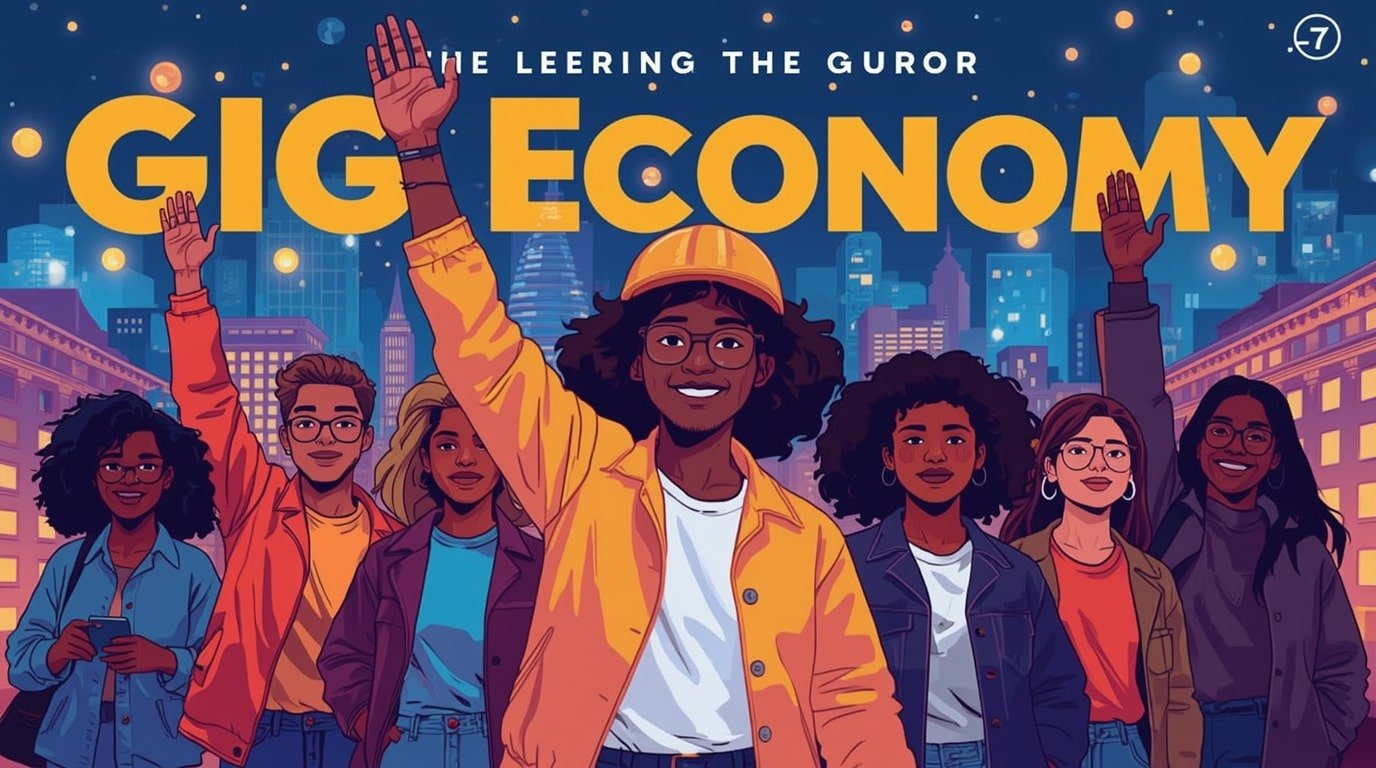
In a paradigm change of the current labour force, the federal legislators have reached a compromise on the ground-breaking legislation that will transform the gig economy. The Gig Worker Empowerment Act is to redefine millions of independent contractors, i.e. think rideshare drivers, food delivery couriers, freelance app users, as full-fledged employees effective January 1, 2026.
This reform is guaranteed to provide minimum wages, overtime pay, health coverage, and unions, which may put hundreds of billions of dollars in the pockets of workers, as well as compel tech giant companies to re-evaluate their business models.
The bill, which has bipartisan support and was passed last month after a long and hot debate, is the end of a time when flexibility was at the high price of financial insecurity. The gig economy has been thriving for more than ten years, and it is driven by such platforms as Uber, DoorDash, and Upwork.
The number of people who are employed by these services is estimated at 60 million Americans, which is almost 40% of the labour force in the United States. However, there is a dark side to the fact that you can be your own boss: there is no sick leave, unstable income, and no unemployment insurance. Social activists believe that the new legislation will bring out a level playing field, where workers can enjoy the digital revolution, and not only shareholders.
The Road to Reform: Court Contests to Capitol Hill
The empathy movement in the protection of gig workers was incremental after high-profile litigations and state experiments. In 2019, an effort to reclassify app-based workers to that end was made in the Assembly bill in California, but met strong opposition, giving way to a ballot measure funded by tech companies to craft exceptions to the act, which then passed as a ballot question (Proposition 22). That triumph of industry lobbyists was not long-term, as similar attempts failed in New York and Massachusetts due to worker strikes and difficulties during the pandemic.
Enter the federal response. The Congress has created a special task force after a 2023 Supreme Court ruling brought significant attention to the employee-contractor boundary. The accounts of the overworked delivery drivers and the poorly paid taskers created a clear image of exploitation.
One of the anonymous couriers reported to lawmakers that he spent 60 hours a week on his bike, avoiding traffic by paying pennies after a fee. The statistics provided by the Department of Labour highlighted the crisis: gig workers earn one-fourth the wages of traditional workers when income is paid in hours, and one in every five does not have any health coverage at all.
Negotiations went into late 2025, balancing between the worker demands and the industry requests for innovation. The final compromise? The rollout will start in 2026 in phases, with platforms being allowed six months to audit the classifications and tune algorithms. Compliance will be imposed on a newly authorised Labour Department department with fines of up to 10,000 dollars for each offence.
The Essential Protections: What Gig Workers Stand to Gain
At its core, the Gig Worker Empowerment Act has a long list of long-desired protections specific to the platform age. Minimum wage will be pegged on federal rates $7.25 an hour base, and states may require more, such as tips and mileage on top of the driver’s. Otime starts once 40 hours per week, which is a blessing to the chaining of several apps to sustain a living.
Health insurance becomes a disruptor. Plans should be able to offer Affordable Care Act-compliant plans, which are subsidised according to the hours logged. The childcare crisis, which women in gig jobs are disproportionately affected by, is tackled with paid family leave, up to 12 weeks per year. The workers are even able to unionise as never before, without the fear of deactivation, and the AFL-CIO rejoiced that this would mark the beginning of collective bargaining in the cloud.
The critics are however warning of unintended consequences. Smaller platforms will go bankrupt at compliance costs, and economists are forecasting a 10-15% increase in service fees transferred to customers. The CEO of Uber made a restraining comment: We respect the legislation and will fit quickly to continue to create the magic of mobility for everyone.
Voices of the Front Lines: Victory and Trepidation
The news is a vindication to many of the gig veterans. Maria Gonzalez, 34, a rideshare driver in Atlanta who works as a nurse and as a supplement to her work shifts, drives with Lyft, expressed her relief. I will not be tempted to take groceries or see the doctor anymore. It is no charity, just what we have deserved, hauling the luggage of strangers early in the morning. The unions are already organising, and the Teamsters have initiated a national organising campaign on the Instacart shopper.
Yet, not everyone cheers. Fiverr freelance graphic designers are concerned that strict timelines can be a creativity killer, and people in the Midwest who deliver by car are worried that they will have fewer options in case platforms are downsized. A group of investment funds protested the bill, saying it was regulatory overreach, and promised to stampede away to other hopeful destinations such as Canada or the EU, which have not yet passed similar reforms.
Peering into the Future: A Redesigned Gig Economy
With 2026 coming close at hand, the side effects may transform city life. There will be fewer cars lying idle on the streets since the safeguarded drivers will be more demanding of getting fair shares, which could reduce the traffic congestion and emissions. Economists predict that household incomes will increase by $200 billion every year, reducing the wealth disparity caused by automation. But it is all about implementation – will the Labour Department be tough enough to audit opaque algorithms?
This is a policy shuffle-up, but a cultural adjustment. The dream of the gig of unlimited freedom becomes sustainable security, disputing the idea that progress requires sacrifice. To the 60 million who are on the edge, 2026 is not only a date, but a redemption. According to one Seattle assembler of the TaskRabbit team, we are not giving up on the hustle. We’re just getting paid for it.”